Luciano Sandrone - Modern Expression
Today, Luciano Sandrone is one of Barolo’s most admired names, a fact made all the more remarkable given his Estate’s humble beginnings. As Kerin O’Keefe writes in Barolo and Barbaresco, Sandrone is one of “the few producers who does not hail from generations of growers and winemakers.” Sandrone’s father was a carpenter, but instead of following in his father’s footsteps, Luciano chose a life in wine, first at Giacomo Borgogno and then at Marchesi de Barolo, where he rose to become cellar master, a role he would hold until 1990. Importer notes
Luciano Sandrone Barolo Le Vigne 2018
A blend of four small parcels, Le Vigne is Sandrone's ode to the classical, Barolo-wide blend that was once the norm. To this end, all the sites that contribute to Le Vigne are markedly different in terms of altitude, exposure and soil. Together they help provide a broad overview of Barolo in any given year. Le Vigne includes fruit from four communes: Barolo (Vignane), Serralunga (Baudana), Novello (Merli) and Castiglione Falletto?in the renowned Villero cru. Sandrone has a long-term lease of this latter site (perhaps best-known for Bruno Giacosa's Villero bottlings between 1978 and 1996). The vines here average around 30 years of age, and Sandrone credits the Villero fruit as adding depth and structure to the blend.
From the 2019 vintage, Sandrone has added a fifth commune to Le Vigne with the addition of a new holding in Le Coste di Monforte in Monforte d'Alba (more on this in later offers). Having such blending options, it is hardly a wonder that Le Vigne is today garnering similar or higher scores than the Aleste (Cannubi Boschis).It's not a competition of course?rather, the two wines offer unique and equally impressive expressions of Barolo. They are the two faces of the Sandrone coin.
Regarding the winemaking, the fruit was mostly destemmed with 25% whole-bunches. Wild yeast fermentation began in tank and following between 10 to 30 days of maceration (depending on the parcel) the maturation occurred in mostly used, 500-litre French oak casks (only 20% new) for 18 months. The wine was bottled unfiltered and then held for a further 18 months before release.
- Producer's Note
One of my personal favorites, the 2018 Barolo Le Vigne is savory in character and packed with dark fruit. Ripe cherry and redcurrant cedes to spice, licorice and fragrant rose. The oak is integrated, but there are added accents of spice and dark tar. Le Vigne is a blend of fruit from Baudana in Serralunga d?Alba, Villero in Castiglione Falletto, Vignane in Barolo and Merli in Novello.
96+ points, Monica Larner, The Wine Advocate
The delicate mix of creamy red berries and savory, truffley notes keeps your nose glued to the glass. And that subtlety is carried over into the medium-to full-bodied palate, where there?s a youthful balance of silky fruit and lightly firm tannins that drives gently through the long finish. Subtle is the word, but excellent is the verdict. So tempting to drink now, but give it a couple of years. Try from 2024.
95 points, James Suckling.
The 2018 Barolo Le Vigne is a mid-weight, tightly wound wine, with a classic sense of austerity that will need at least a few years in bottle to start softening. Red cherry fruit, white flowers, mint and chalk lend brightness and tension throughout. In 2018, the blend of vineyards is Baudana, Villero, Vignane and Merli.
93 points, Antonio Galloni, Vinous
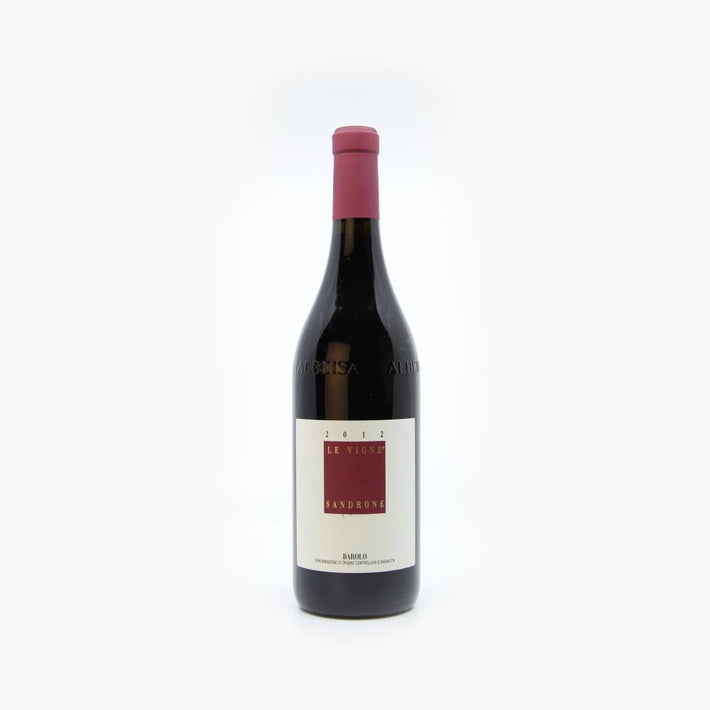
Luciano Sandrone Barolo Le Vigne 2020
A blend of several small parcels of vines from several communes, Le Vigne is Sandrone’s ode to the classic Barolo-wide blend that was once the norm. All the sites that contribute to Le Vigne are markedly different from each other in terms of altitude, soil and exposure, and together provide a broad overview of Barolo in a given year. 2020 was the second year to include Nebbiolo from Sandrone’s new holding in Le Coste di Monforte. Sandrone has been farming this Monforte d’Alba site since 2000. So, from this vintage, Le Vigne includes fruit from five communes: Barolo, Serralunga d’Alba, Novello, Castiglione Falletto and Monforte d’Alba.
The fruit ferments spontaneously in tank before malolactic fermentation and aging in mainly used 500-litre French oak casks. Like Aleste, approximately 20-30% of the grapes ferment as bunches, with a very high percentage of whole berries in the destemmed portion (thanks to a state-of-the-art destemmer). The macerations are managed very carefully, and the bottling occurs relatively early as Luca Sandrone wants to capture the finest tannins and as much fruit purity as possible (another key to understanding the wines produced here). So, time on skins varied from 15 days to up to three weeks. Total time in oak was 20-22 months, and the wine was, as always, bottled unfiltered.
It’s hard to remember a time when a young Le Vigne tasted so alluring out of the gates. It is fresh, translucent and totally inviting from the off, with sweet red berries, strawberry, dried orange and cedar woven throughout a finely sculpted palate framed by ripe, chalky tannins. It’s a knockout Le Vigne.
“The compelling Sandrone 2020 Le Vigne opens with delicate but alluring scents of violet, rose, wild berry and aromatic herb. Reflecting the nose, the savory, elegant palate delivers juicy Morello cherry, strawberry compote, star anise and cake spice alongside a backbone of taut, velvety tannins.” 96 points Kerin O'Keefe, kerinokeefe.com
“The Luciano Sandrone 2020 Barolo Le Vigne is open-knit in texture with sun-drenched aromas. You get ripe fruit with black cherry, blackcurrant, forest floor and wild mushroom. With time in the glass, the wine reveals floral definition, grilled tarragon herb and a heavier note of wheat biscuit. Starting with the 2019 vintage, Le Vigne also includes Le Coste di Monforte fruit along with fruit from Baudana in Serralunga d'Alba, Villero in Castiglione Falletto, Vignane in Barolo and Merli in Novello.” 95 points, Monica Larner, The Wine Advocate.
“The 2020 Barolo Le Vigne is graced with brilliant aromatic intensity and plenty of depth. Crushed rose petal, mint, blood orange, spice, lavender and pomegranate all meld together. Le Vigne has a bit more aromatic vibrancy and verve than the Aleste, but shares a general feeling of openness with its sibling.” 94 points, Antonio Galloni, Vinous.
“Lustrous deep ruby. Seductive nose of red fruit with a note of oak perfectly aligned with the fruit. Succulent and at the same time youthful and fresh. Firm tannins giving the fruit its spine. Long and succulent, but the tannins need more time to integrate.” 17.5 points, Walter Speller, JancisRobinson.com.
Luciano Sandrone Barolo Aleste 2018
The name of the wine may have changed, but Sandrone’s famous single-cru Barolo is still, and will always be, 100% Cannubi Boschis. Boschis is a particular subzone near the northern end of the Cannubi hill. It’s a cru that is synonymous with this grower, as Luciano was the first to place its name on a label (1985), and it is located directly across from the Sandrone cellars. Sandrone farms three plots in Cannubi Boschis, totalling 1.9 hectares with south and south-easterly exposures, calcareous clay soils with some sand, and vines that are on average 37 years of age.
The Cannubi slope is complex, with soil changes, many different aspects and variation in altitude. Highlighting the uniqueness of the wines of Cannubi Boschis, as compared to the rest of the Cannubi hill, Alessandro Masnaghetti [L’Enciclopedia delle Grandi Vigne del Barolo] writes, “The wines, in general, have good body, much elegance, and more polished tannins than other Cannubi wines”. First made in 1985, this was one of the pioneering single-cru wines of the region, helping to awaken the wine world to the potential of Barolo’s varied and complex terroirs.
Aside from a little bit longer on skins, the winemaking is essentially identical to Le Vigne: destemming with a very high percentage of whole berries and a smaller percentage of whole bunches; wild yeast fermentation; aging in mostly used, 500-litre French oak casks (20% new); and bottling without filtration after 18 months. - Producer's Note
“Made with fruit from Cannubi Boschis, the Luciano Sandrone 2018 Barolo Aleste is plump and ripe, but this wine also shows a more delicate character that is its ace card. The aromas are filigreed and fine with dark fruit, spice and licorice. The effect is integrated, and the wine shows a lovely, softer personality to balance out this mildly concentrated expression.” 96 points, Monica Larner, The Wine Advocate
“The 2018 Barolo Aleste is gorgeous, but also very quite today. There’s terrific purity to the dark red/purplish fruit and a good bit of volume too, but readers will have to be patient. Bright acids and firm tannins lend energy. I admire the presence and texture here. The Aleste, from Cannubi Boschis, benefits from a site that can handle moisture. This is nicely done.” 94 points, Antonio Galloni, Vinous
“Dried red berries and dried flowers, almost tobacco on the nose. Citrus and minty notes add character. Medium-to full-bodied, elegant and silky palate that thickens out with fine, creamy tannins as it progresses. Super texture to this, gently coating the palate. Rather firmer just at the end for now. Really refined and elegant. Best from 2024.” 94 points, James Suckling, jamessuckling.com
